
Choosing a sculpture for a space is not simply about finding something that looks beautiful. The right sculpture can influence the entire atmosphere of a room, create a strong first impression and even become the visual centerpiece of a property.
But there is one decision that often comes first: Should you choose a modern sculpture or a traditional sculpture?
Modern sculptures tend to focus on clean lines, abstract forms, geometric shapes and contemporary materials. Traditional sculptures, on the other hand, often draw inspiration from history, culture, nature and classical artistic techniques.
In Saudi Arabia, both styles can work beautifully. The best choice depends on your architecture, interior design, purpose, location and the feeling you want the artwork to create.
Whether you are furnishing a luxury villa in Riyadh, designing a hotel lobby in Jeddah or planning a large outdoor installation, understanding the difference between modern and traditional sculpture can make the selection process much easier.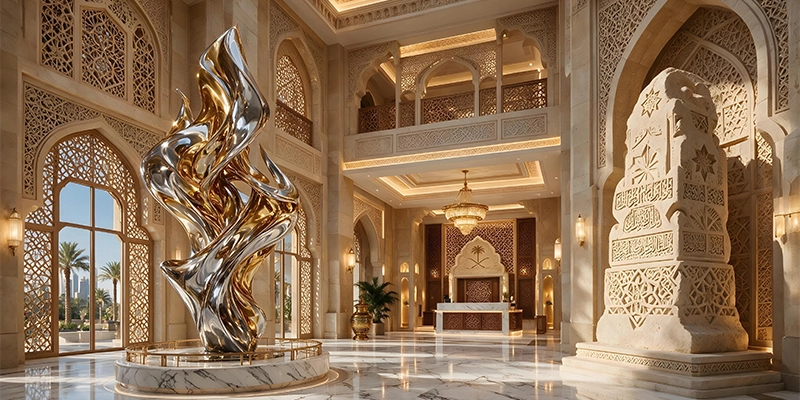
Modern sculpture generally focuses on contemporary artistic expression rather than traditional representation.
Instead of creating an exact representation of a person, animal or object, modern artists may experiment with shapes, proportions, textures and materials.
Common characteristics include:
Materials such as stainless steel, bronze, brass, fiberglass, resin, corten steel and other contemporary materials are frequently used for modern sculpture projects.
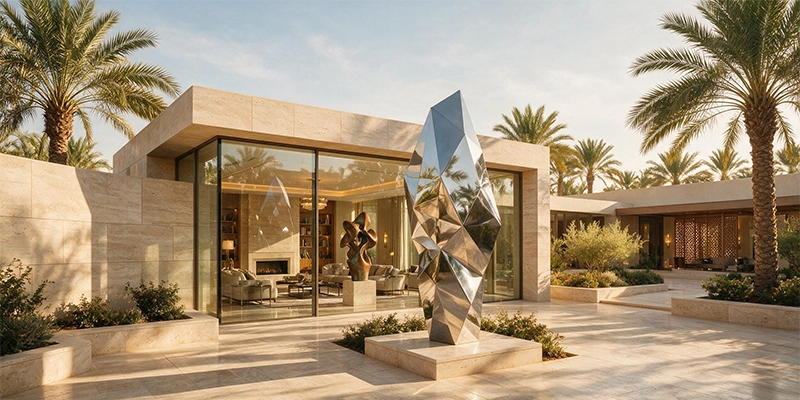
A modern sculpture can be particularly effective in spaces where architecture and interior design already have a contemporary character.
—
Traditional sculpture is generally influenced by established artistic traditions, cultural heritage and recognizable forms.
Traditional sculptures may represent people, animals, historical figures, cultural symbols or elements of nature. They can also incorporate decorative details and techniques associated with specific artistic traditions.
Typical characteristics include:
Traditional sculpture can be especially suitable for spaces where heritage, elegance and cultural identity are important.
For projects in Saudi Arabia, traditional-inspired sculptures can also complement architectural elements influenced by regional culture and design.
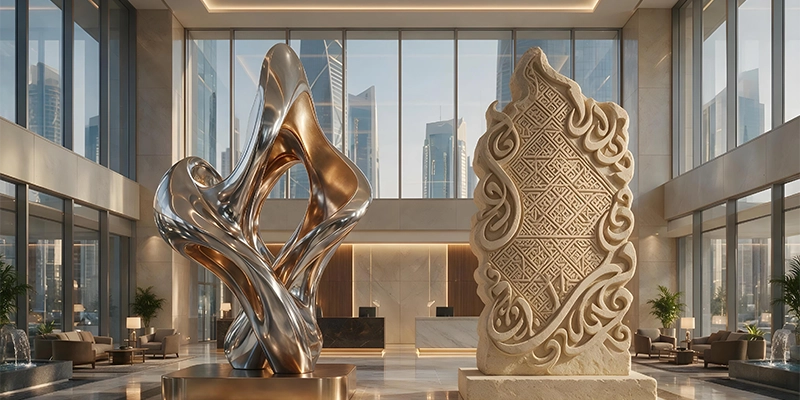
The biggest difference between the two styles is their visual language.
Feature | Modern Sculpture | Traditional Sculpture |
Design | Abstract, geometric or minimalist | Classical, figurative or decorative |
Inspiration | Contemporary ideas and concepts | History, culture and established traditions |
Appearance | Clean, bold and experimental | Detailed, refined and recognizable |
Materials | Metal, fiberglass, resin, steel and more | Bronze, marble, wood, stone and metal |
Best suited for | Contemporary spaces | Classic, heritage and elegant spaces |
Overall feeling | Artistic, bold and innovative | Timeless, cultural and sophisticated |
Neither style is automatically better.
The right choice depends on the environment in which the sculpture will be installed.
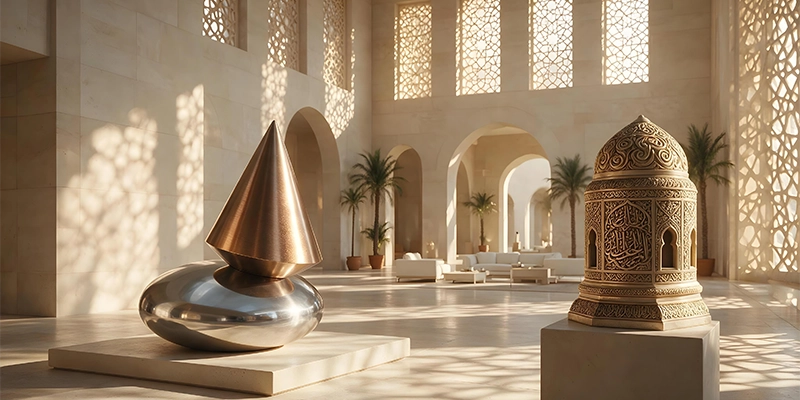
When Should You Choose a Modern Sculpture?
A modern sculpture is often a strong choice when the surrounding architecture has a contemporary design.
Large contemporary villas can benefit from sculptures with simple but powerful forms.
For example, a geometric stainless steel sculpture can work well in an entrance courtyard, while an abstract bronze piece may add character to a living room or reception area.
The sculpture does not necessarily need to match every element of the interior. In many cases, creating contrast can make the artwork more interesting.
Modern sculptures are particularly effective in corporate environments.
A carefully selected sculpture in an office reception area can create an immediate impression on clients and visitors.
Abstract designs can also communicate ideas such as:
For businesses looking for custom sculptures in Saudi Arabia, the design can be developed around the company’s identity and architectural environment.
Hotels often use statement artwork to make their entrances and public spaces memorable.
A large modern sculpture placed in a hotel lobby, entrance or outdoor courtyard can become a defining visual feature.
For luxury hospitality projects, the sculpture can also be designed specifically around the hotel’s architecture, branding and interior concept.
Modern sculptures can also work extremely well outdoors.
Large-scale stainless steel, bronze or corten steel sculptures can create visual landmarks in:
For outdoor projects, material selection is particularly important because the sculpture must withstand the local environmental conditions.
Traditional sculpture may be a better choice when the property has a classic, cultural or heritage-inspired character.
Traditional sculptures can complement architecture that incorporates historical or regional design elements.
A detailed sculpture can reinforce the sense of history and craftsmanship without making the space feel disconnected from its architectural identity.
For luxury residences with classical interiors, traditional sculptures can add elegance and visual depth.
A marble, bronze or stone sculpture can work particularly well in:
Traditional or culturally inspired sculptures can help create a stronger sense of place.
Hotels, cultural centers and other hospitality environments may use sculpture to reflect local heritage while maintaining a sophisticated visual identity.
The key is to avoid choosing artwork simply because it looks traditional. The sculpture should have a meaningful relationship with the space.
If you are still unsure between modern and traditional sculpture, consider these five factors.
Start with the building itself.
A minimalist building with glass, concrete and sharp architectural lines may naturally suit a modern sculpture.
A property featuring arches, natural stone, classical detailing or heritage-inspired elements may work better with a traditional design.
However, contrast can also be effective.
A traditional building with a striking contemporary sculpture can create a sophisticated dialogue between old and new.
Your furniture, flooring, lighting and wall treatments should also influence your decision.
If your interiors are minimalist, a highly detailed traditional sculpture could become visually overwhelming.
Similarly, placing an extremely minimalist sculpture in a heavily decorative classical interior may make the artwork feel disconnected.
Look for balance rather than perfect matching.
Ask yourself what you want the sculpture to accomplish.
Is it supposed to:
For example, a corporate office may benefit from an abstract sculpture representing innovation, while a heritage-focused hospitality project may require something more culturally expressive.
Scale can completely change the impact of a sculpture.
A small sculpture can work beautifully on a console, reception desk or side table.
Large sculptures, however, require sufficient space around them.
For outdoor installations, the sculpture should be proportional to the surrounding architecture and landscape.
A sculpture that is too small can disappear into a large environment. One that is too large can overwhelm the space.
Material is just as important as style.
Bronze can create a timeless and sophisticated appearance.
Stainless steel works well for contemporary and modern environments.
Corten steel can provide an architectural, industrial character.
Marble and stone can create a luxurious and classical appearance.
Fiberglass and resin can provide flexibility for custom shapes, finishes and larger installations.
The material should be selected based on the design, location, maintenance requirements and expected lifespan.
Absolutely.
In fact, combining modern and traditional elements can create some of the most interesting spaces.
A contemporary hotel, for example, could feature a modern abstract sculpture alongside architectural details inspired by regional heritage.
Similarly, a luxury villa could use traditional artwork indoors while incorporating a contemporary outdoor sculpture in the garden.
This approach works because the two styles can create contrast while still contributing to a cohesive design.
The key is to establish a visual connection through material, scale, color, finish or concept.
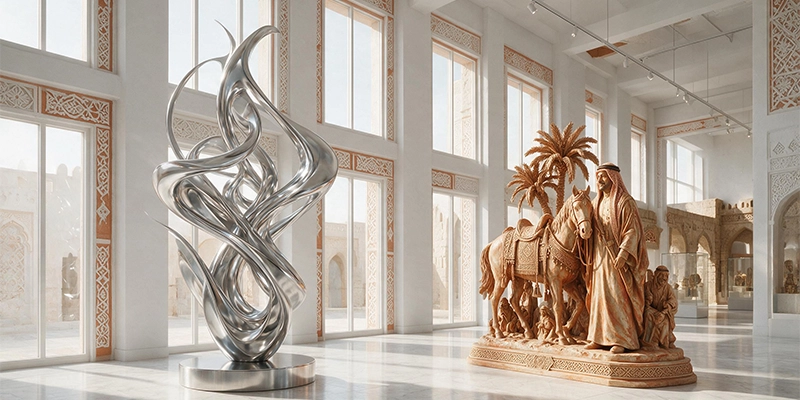
Saudi Arabia offers a particularly interesting environment for sculpture because modern architecture and cultural heritage often exist side by side.
New luxury developments, hotels, corporate buildings and residential projects increasingly combine contemporary architecture with elements inspired by local identity.
This creates opportunities for both modern and traditional sculpture.
Modern sculptures can work particularly well with contemporary commercial developments, corporate offices and luxury residences.
Large-scale geometric and abstract installations can also create strong visual statements in landscaped outdoor environments.
Jeddah’s relationship with art, architecture and the Red Sea environment provides opportunities for both contemporary and culturally inspired sculpture.
Sculptures can be used in hotels, waterfront developments, residential properties and commercial spaces.
Hotels and resorts can combine contemporary sculpture with cultural references to create an environment that feels both sophisticated and connected to its location.
Sometimes, choosing between modern and traditional artwork is not enough.
Your space may require something completely unique.
A custom sculpture can be designed according to the dimensions, architectural style, brand identity and purpose of the project.
Instead of searching for an artwork that is “almost right,” you can develop a sculpture around the space itself.
Custom sculpture is especially useful for:
The design process can consider everything from the initial concept and material selection to fabrication, finishing, transportation and installation.
Common Mistakes to Avoid When Choosing a Sculpture
A sculpture may look impressive online but feel completely wrong when placed in your actual environment.
Always consider the scale, architecture, lighting and surrounding furniture.
An indoor sculpture and an outdoor sculpture have very different requirements.
Outdoor pieces need appropriate materials, finishes and structural planning.
Always measure the available space before purchasing or commissioning artwork.
A sculpture viewed from several meters away needs a different level of visual impact than a small sculpture placed on a table.
Your sculpture does not need to match your furniture perfectly.
Sometimes contrast is what makes a space feel more sophisticated.
There is no universal answer.
Choose a modern sculpture if you want your space to feel contemporary, artistic, minimalist or innovative.
Choose a traditional sculpture if you want to emphasize elegance, craftsmanship, history or cultural character.
And if your project combines both architectural approaches, consider using a carefully planned combination of modern and traditional elements.
The most important thing is that the sculpture feels intentional.
A well-designed sculpture should not simply occupy an empty corner. It should contribute to the identity of the entire space.
Whether you are planning a modern corporate office, a luxury villa, a hotel lobby or a large outdoor development, the right sculpture can transform the environment.
At ArtSmiley, sculpture projects can be developed around the specific requirements of the space, from contemporary and abstract concepts to traditional and culturally inspired designs.
From concept development and material selection to fabrication and installation, choosing the right approach starts with understanding your space.
Looking for custom sculpture solutions in Saudi Arabia? Explore ArtSmiley’s sculpture services and discover how the right artwork can become the defining feature of your project.
Modern sculptures generally focus on abstract forms, contemporary concepts, geometric shapes and experimental materials, while traditional sculptures are more likely to feature recognizable forms, cultural references, classical techniques and detailed craftsmanship.
Yes. Modern sculptures can work extremely well in contemporary luxury villas, especially in entrances, courtyards, gardens, living areas and other spaces with minimalist or modern architecture.
Traditional sculptures can be used in villas, hotels, cultural spaces, gardens, heritage-inspired properties, reception areas and other environments where craftsmanship and cultural character are important.
Materials such as stainless steel, bronze and corten steel can be suitable for outdoor sculpture projects when properly designed, fabricated and finished for the installation environment.
Yes. Custom sculptures can be developed around the required dimensions, architectural style, concept, material, finish and installation location.
Not necessarily. A sculpture can complement your interior design without matching it exactly. Carefully selected contrast can make the artwork more visually interesting and create a stronger focal point.
Suggested Internal Links for ArtSmileyBiz.me:
0